Featured Post

For the Love of Mary... my latest video

 Scene from Death of a Gunfighter, starring Richard Widmark and Lena Horne. If you have read The Light of Day, (my manuscript below...

Tuesday, July 12, 2022

Norris Wright Cuney: A Texas Black History Prototype

... Who became a tragic stereotype.

You've never heard of him. Not unless you are seriously into Texas history. And Black history at that. He was of the first generation of Black freedmen in our country. He had an education and the gift of public speaking and was among of the first African Americans to rise within the Republican Party and be elected to public office, and then the White junta stone-walled his momentum and his legacy like an embarrassing criminal record. Norris Wright Cuney was one of the first of many largely forgotten Black forefathers; men and women who suffered all kinds of oppression, yet achieved the highest stations in what I call “Black Exceptionalism.”

And don't laugh at that term. I can show you plenty of places, cities right here in Texas where the most extraordinary people in the community were Black. In fact I am about to. And history and popular culture today supports that fact. But due to the racism in the past we have never heard of many of these individuals. Sadly it seems, our lack of knowledge about Black Exceptionalism is a persistent hold-over from our past, and one we cannot shake, whether we are Black or White or like Norris Cuney, somewhere in between.

The mulatto son of Texas Senator Phillip Cuney and his negro slave, Miss Adeline Stuart, Norris Wright Cuney was born into a mixed-race plantation family 1846 in Hempstead, Texas. He was freed in 1859 when still a teenager, and sent by his wealthy father to Pittsburgh to be educated. Afterwards he relocated to the coast where he started and managed his own stevedore business. Eventually Cuney would be appointed to the highest ranking position of any African American in the South during the late 19th century.

During the war, Norris had worked on steamships which serviced up and down the Mississippi and Ohio Rivers, giving him invaluable experience. Right after the Civil War, he went to Galveston where he got involved in the Union League, a somewhat clandestine government-funded organization designed to establish Civil Rights for the newly freed slaves. Cuney was soon considered one of the most important Black leaders in Texas, and his activities were closely reported by the New York Times, giving him national prominance. In 1870, Cuney served as the first sergeant of arms of the Reconstruction Legislature in Texas, where he became friends with Governor Edmund Davis. A fierce post-Civil War politician, he was elected to Galveston alderman and Republican Party Chairman, was a Mason and labor union leader, and in 1872 was appointed as a Federal Customs Collections agent, while his excellent education landed him as a member of the Galveston County School Board, which was beginning the first racially integrated schools in Texas, some one hundred years before this became the law of the land.

Norris Cuney's Republican leadership in Texas lasted almost twenty years, and is known by historians as the “Cuney Era.” Still, after a number of attempts, he was never able to get elected to either the Texas State Legislature or the Texas Senate. Then in 1882 as federal troops vacated the state at the end of “Reconstruction,” Cuney's days of influence were numbered. He was elected to Galveston alderman in 1883, but he and his fellow Black politicians were finally brought down by the manipulations of White Democrats, a conspiracy he dubbed the “Lilly White” movement, which joined forces with President Grover Cleveland and finally removed him and other Blacks from statewide involvement or influence in the Republican Party. This was the beginning of the “Jim Crow” era, or the regression of Negro Civil Rights enforced by Democratic leaders all over the United States. Never the less, in 1889 he was appointed to be U. S. Collector of Customs, the highest ranking appointment for any person of color before the turn of the century.

Nobody can blame Norris Wright Cuney for trying to hide or disappear. But his importance to Texas history was so obliterated that his and his wife's 16 inch by 20 inch portraits could hang in an antique shop in Belton, Texas for years without ever being recognized. That's where I entered the picture, pardon the pun.

Norris Wright Cuney

Loving history, and being an avid collector of antique images, I have been on this crazy doppelganger kick now for almost a decade, and had become my own worst doubter. Never the less I kept finding images at every turn of famous persons from the Victorian era. I had seen these portraits of the Cuneys a few years ago and said to my self, “Surely not.” What would a portrait of a prominent Black leader from Hempstead be doing in Belton, Texas? I told myself I had become delusional. It just wasn't that easy to locate rare old photographs of important people from history. But Saturday I was sauntering through the same antique shop... and saw them again... and by this time I had learned to trust my instincts.

I took a photo with my cell phone and looked him up. Bingo. Another important find. I often never tell the folks who sell old images to me that I recognize the people in them, or whom I think they are. It would be disheartening to them, and usually I have a long row to hoe to prove it anyway. But this time I broke from that habit, and asked the nice lady in the antique shop if she cared to know. And she did. All she knew for sure about them was that she had owned the portraits “a long time.”

Adelina Dowdy Cuney

When I told her, suddenly bells rang in her mind, and almost instantly she produced an article out of a 2013 Austin newspaper. My full disclosure had paid off. And here is where a coincidence became a Divine Appointment. Her memory jogged, she knew exactly where the portraits had come from. The portraits had come from a prominent home in Bell County... the subject of the Austin article, in fact the home of the most prominent Black man in Bell County during the 1930's and 40's. A man who knew many important Black leaders around the state. When he died, his house was a treasure trove of Texas Black history. When his home was sold around 2013, this Belton antique dealer was invited to come peruse and obtain what she could use, and she recovered a number of things, including the tattered portraits featured here, of this handsome, heretofore unknown couple. Also a letter made out on KKK stationery, wrapped around a projectile and thrown through the window of a prominent Black family, boldly threatening them. This may well have been the same cousin of the homeowner who reportedly ran for Congress and had received death threats. Blacks were not just hated and frustrated back then, they were killed for trying to be Americans. Yet this Black man had persevered and prevailed, and I was anxious to know more about him.

The newspaper editorial, written by Brad Stutzman, was entitled “A house of history, a man of mystery.” Stutzman's article highlighted the black hole in most Texas communities where Black history should be residing. The Belton citizen who lived at 702 S. Pearl, a large, red brick home known to him and his family as “Villa LuNecia,” was an associate of nationally prominent Blacks, and it was said that Duke Ellington once tickled the ivories there. Marcus Garvey, the controversial Black publisher and “Back to Africa” demagogue had once visited there. Local legends place many famous Black entertainers and sports icons having stayed in the Kinchion home, considered a hostel to African Americans on the road, when many hotels were not available to Blacks. So today this house is fittingly listed on the National Register of Historic Places. The owner, this Belton legend, named L. B. Kinchion Sr., had made his fortune selling Blacks cosmetics and beauty products, and then built the nicest house in the nicest Black neighborhood. L. B. Kinchion eventually had far-reaching contacts with Black educators, politicians, entertainers, and military men. A former neighbor remembered in the 2013 article that Kinchion was a sort "Great Gatsby" kind of character, referring to the movie starring Robert Redford, and added that he had a cook, a butler, a valet and a chauffeur. Kinchion lived better than 99% of his White neighbors. So who WAS this guy?

L. B. Kinchion

Stutzman's mystery man was not so much a mystery, a Black version of the Great Gatsby as the writer observed, as much as he was a vastly diversified individual with his fingers in many pots, which may have slightly watered down his impact in any of them. Kinchion's first fingers stirred the pot in Texas education, perhaps his greatest interest. He was there when Blacks organized and levered the state for better Black colleges, which ultimately led to the state's support of Prairie View University. An obvious savante, Kinchion was serving as a school principal when only 27 years old. Later he served as the principal of the West Belton Colored High School. And after twenty years in Texas education, he was serving as president of the State Colored Teachers Association. That's one pot.

The talented educator apparently took a break from his school duties around 1905 when he joined the Texas National Guard. Records show that he was captain of Company C, Hawley Guards, 1st Colored Battalion-Infantry which was based in Galveston. He must have stayed with it, because he was commissioned as a major in the Texas National Guard in 1934. That's a second pot. Kinchion had a penchant for service to the community. He also helped establish the Moorland YMCA in Dallas. Due to aparthied, he was very active in the Black branch of the Knights of Pythias, a national service organization, as was one of his sons. He invested a great deal of his life and fortune in his membership and was eventually made Grand Chancellor. We'll call that a third pot. And it was believed that he spoke seven different languages. This would have been handy as his home was a frequent gathering place and sometime way-station for travelers, in a circle euphemistically known as "the Blue Moon Chasers Social Club." That would be the fourth pot. Yet neither L. B. Kinchion's service, his glamourous high life nor his accomplishments or any of his “pots” are known to any published account of Bell County history. Nobody with his lifestyle could have maintained that much “mystery” to those who truly knew him, but what is amazing was how fast his society forgot him.

By 2013, approximately 50 years after his passing, those who remembered him observed to Stutzman that although Villa LuNecia had been a popular scene of social activity, where the “Who's Who” of African America once partied and toasted one another, very few folks showed up at Kinchion's funeral. Maybe his contemporaries preceded him in death, and sadly several of his children did not live long, and so there were few surviving to mourn his death or to leave his belongings, or his legacy to. And a talented, industrious, father of the Belton Black community vanished, almost without a trace.

Luckily, the Austin journalist had discovered his story, and interviewed a few old-time Beltonians who filled in a few blanks... so there was at least a trace of his existence in that black hole. Where Black history should reside.

We cannot blame the local historians, who missed his contributions later, if those achievements were not recognized initially by his contemporaries. And this vacuum is where Stutzman and many others might have perceived a shroud of mystery surrounding L. B. Kinchion and his life. To some degree, it seems even Kinchion did not give a nubbin about what people thought, or what legacy he might have owned, or what might have been written in the history books. It is obvious that he fought all of his life for his causes, and he left it all on the field of battle and the aftermath made little difference to him. But he might have been wrong about his indifference. Stories like his needed to be recorded and preserved, and the present accusations of racism in our country are why.

I get mad at all the claims that there is still so much racism in this country. Then I run into the remnants of it; precious icons of Black history like the portraits of the Cuneys hanging in the shadows, proving that nobody, not even Blacks know or care very much about their history... or these two important portraits of the Cuneys, once cherished by Kinchion and his family, would never have ended up as anonymous faces in an antique shop, the last vestiges of a forgotten Black achiever whose contributions may have perished faster than his body returned to the dust from which it came.

I have to say with all humility, that history is important, for many reasons, but it is up to every group to preserve their own heritage, and when they do not, their children will not learn the valuable, fortifying, inspiring lessons of history. And subsequently, as the Bible says, “my children perish from lack of knowledge.”

It is no wonder that today's African Americans still claim and blame the invisible arms of racism, so long after their emancipation, when they have not treasured and preserved their victors and their victories, and taught the outstanding examples of Black achievement, such as the Kinchions and Cuneys, which might have provided hope and inspiration to generations. So today our children have no clue about Black Exceptionalism. But if I know it and believe it, then certainly every Black child could and should. Teaching children of all races the value of achievement, especially that which faced adversity, and ackowledgement of individuals who have paved the way, would free them from crippling fears and suspicions, and launch them into reaching their own potential. That was what history used to do before it was redesigned to heap guilt and shame upon our most impressionable fledgling citzens.

NOTE!: IF YOU ARE A FIRST-TIME VISITOR TO THIS BLOG, My book about Texas Blues can be found near the very bottom of this front page. Scroll down and look for "The Light of Day" I recommend starting with the Introduction!

Thanks for stopping by!

Sunday, August 16, 2015

IT HAD TO HAPPEN- and only at the Navasota Bluesfest

 Ruthie Foster reconnects with her adoring Navasota fans. Bluesfest organizers finally overcame communication challenges that came with her fame and brought her back to celebrate the 20th annual Bluesfest.

For the THIRD consecutive year, the Navasota Bluesfest has had the strongest line-up ever. Saturday I could not stand it and brought my camera, (been trying to wean myself form acting like a danged local braggart!) and I sure was glad... got some treasured shots of the stellar entertainers.

Although I sorely missed some our past favorites like Ezra Charles (now retired), Randy Pavlock, Nat Dove, Texas Johnny Brown (RIP) Texas Johnny Boy, Tubie and the Touchtones and the late GREAT Don Kesee,  the truth is the show went on and up and away as the BEST SHOW EVER!

Highlights: 


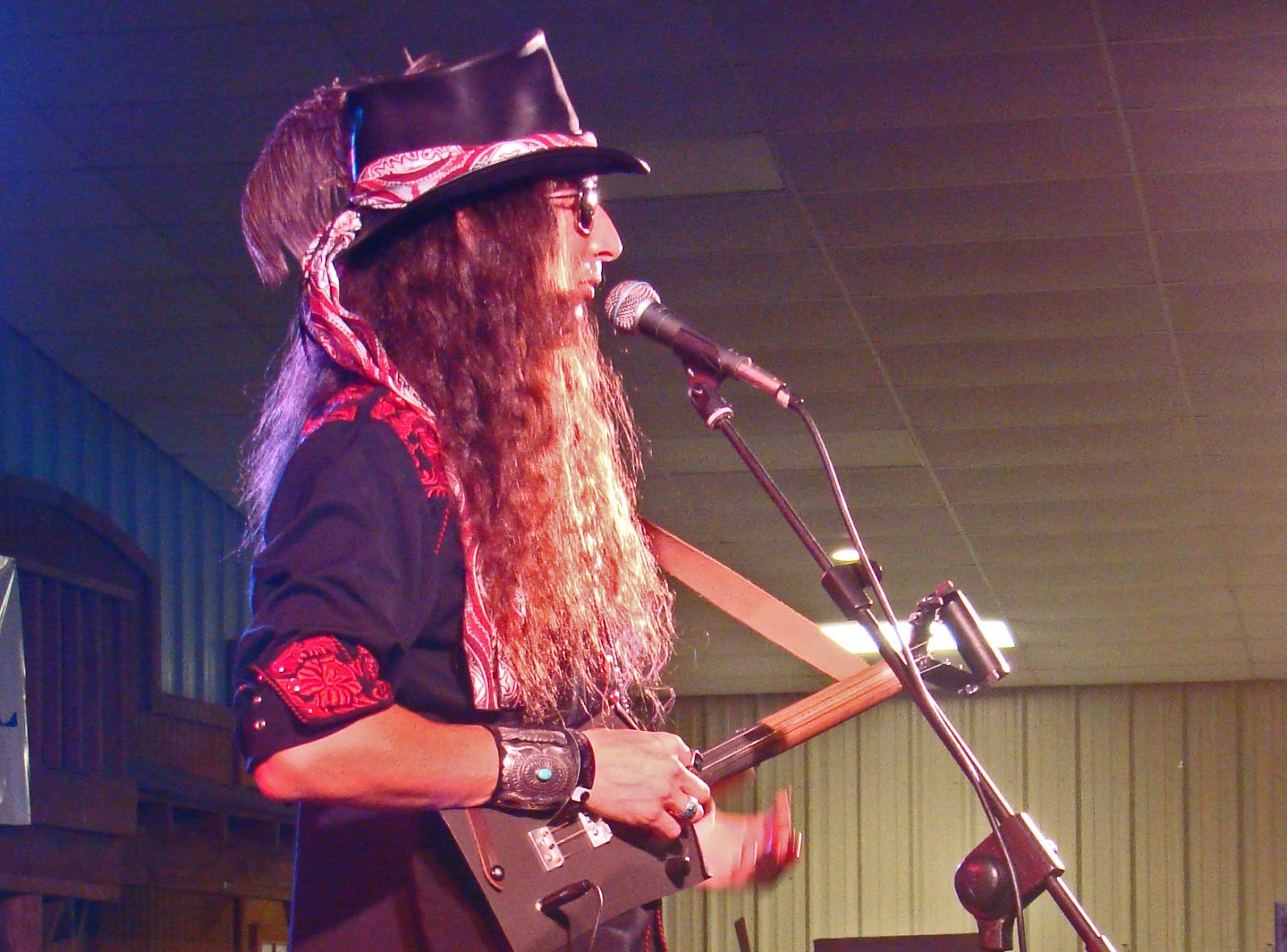
 Justin Johnson shows off his arsenal of bizarre instruments with his musical wizardry. This was his second appearance at the Navasota Bluesfest.


Yes, that is a shovel he is playing... actually transformed into a "diddley bow."   The music he extracts out of such instruments is nothing short of fantastic.


 Californian master Doug MacLeod returned to prove that his riveting performance and witticisms of last year were no figment... he is simply the king of resonator slide guitar blues.


Blues Amazon Betty Fox of Florida- and her band, came a long way to perform and give a fitting tribute to Ruthie Foster, one of her personal idols... She is "going places" and thankfully Bluesfest brought her to its stage in her prime.


 Back after many years, Sonny Boy Terry reminded Navasota what she had been missing, and that would be his powerful, driving harmonica assault, delivered with perfection.


 Blues prodigy Christian Dozzler followed with equal enthusiasm on harmonica and keyboard, AND, breaking out his accordion, served up his addictive zydeco blues. The dancing crowd finally gave up on sitting down.


ONLY Ruthie Foster of Gause, Texas could have followed all of that and still blown everyone away... which she did... with true joy in her heart... it was a sentimental victory lap for this accomplished performer of whom Brazos Valley blues fans are extremely proud.

 Ruthie Foster gives Navasota her famous epic smile... and it bounced back a hundred-fold. Ruthie once served on the board of the Bluesfest.


 Meanwhile genre artist David Woods visited with art lovers and sold his works, which in many ways are the canvas equivalent to Texas Blues. Bluesfest was once again the perfect, complete Texas art experience.


Sunday, April 19, 2015

For the Love of Mary... my latest video


 Scene from Death of a Gunfighter, starring Richard Widmark and Lena Horne.

If you have read The Light of Day, (my manuscript below at the left) you are familiar with this story... but still you may not have felt it... about Sheriff Garrett Scott... but that is not all of the story... I have made a music video which may remedy that! This is one heck of a story! Click on the link below.

https://www.youtube.com/watch?v=seDOMQ1rxKs

Tuesday, June 24, 2014

Johnny Bush returns to his ROOTS... in Navasota, Texas


Johnny Bush means one thing to his fans: DANCING!
Johnny Bush had grandparents who lived here in Grimes County and he lived for a while with his Uncle, country music iconoclast Jerry Jericho of Millican. He is a man that has watched a lot of water pass under the bridge... and perhaps his Navasota roots with it, but when he talks, or writes a book, those roots find their way to the surface. He performed at this year's Grimes County Fair, and started his show with a surprising greeting... "It's great to be back home here in Millican, Texas!"
I was able to speak with him for a moment and capture some photographs of this Texas legend. And then I read his book...
 
Johnny Bush shot the rapids of Whiskey River and thanks be to God, lived to tell the tale. In his book by that name he forever identifies himself with the iconic song he wrote and the ironic life he lived. Whiskey River is a surprisingly candid and introspective journey over the deadly falls of a hard living country singer with little or no moral compass. And amazingly, after plunging into the depths, Bush and his readers come out of the spill better for it.

Whenever I ever named my top five favorite traditional country singers… including Charlie Pride, Marty Robbins, Willie Nelson and Merle Haggard, Johnny Bush was always right up there. His singing was perhaps the best in country music, but I never related to his lyrics, or at least did not want to, like the others. He sang so many country standards focused on the culture of alcohol; Whiskey River, There Stands the Glass, Green Snakes on the Ceiling… and this was not my reality. Still, he had a classic, almost operatic voice that had peerless range and engaging passion. But he will tell you he was and is an artist... a performer. Johnny Bush has a voice that fit his lifestyle and his songs... a voice that was crisp as ice and as smooth as whiskey; but one that eventually cracked like a drunk driver into a pine tree.

Texans have always gobbled up his songs like cold beer. Johnny was simpatico.  When he cried out in his sterling tenor voice, it was OK for the toughest dance hall redneck to feel sorry for himself. You might say he provided a catharsis for all country fans caught in the same whirlpool he was singing from. I grew up with his songs, in fact in High School we had a jukebox in the cafeteria and the rednecks played his songs relentlessly. I eventually learned the words to his infectious drinkin’ songs whether I wanted to or not.

A baby-faced Bush, on the right, poses with two  country music legends, his uncle Jerry Jericho (left), and Ernest Tubb.

One might have surmised that with all of that partying in his music, the man was having a good time. And he thought he was. His life was even wilder than his songs, going through women like race car drivers go through automobiles, fueled by hard liquor and uppers and adrenaline. Johnny Bush was the narcissistic, unfaithful, womanizing scoundrel that typified the music industry in the 1970’s. He was the "one fool on a stool." About halfway through the book, I was sure that Bush was the kind of man my redneck buddies would love to corner in a back alley and teach him some manners. In other words, I am sure I would not have liked him. If I had seen the man behind the sequins and sunglasses when I was first introduced to his songs, I would have intentionally ignored his music out of spite.

Still belting that impeccable voice, at first I started to accuse him of lip-sinking. On a good day his delivery is still phenomenal. And he has more better days than he used to.

But the reason that I am writing this is Johnny’s showboat was capsized while racing down that Whiskey River, and over the years, he came out of that miserable wreck as a valuable member to humanity. Whiskey River is a painful, turn by turn confession of an entertainer who wanted it all, got a lot, and then almost lost everything as he reached the golden shores of fame as an RCA recording artist. And only then did he become a human being… and I am glad to say, after overcoming some scary physical handicaps,  his singing was better than ever.

Amazingly, through his perilous, self-destructive quest, Bush pairs up with Willie, who becomes a lifelong friend and adviser, courageously helps Charlie Pride get recognition, and befriends Robbins and Haggard. His story is the story of all the music I ever loved. It is so gratifying reading about his journey and the men who helped guide him and at times saved him, and know I have been listening to their music all of these years. It is sort of a unique, eternal Texas family that has been sewn together with sound waves.

Dancing. Dancers made Bush popular. Dance was the drivng force, the motive and the market. He could always make more money in Texas singing for country dancers than he could anywhere else at mere music concerts.

His biography is not a good read for the squeamish or easily offended. Bush tells some pretty earthy stories that I would never tell… about life on the road, but he also does not glorify his mistakes and speaks a great deal about how Faith has shaped his strong finish. Bush is no Sunday School teacher, and his book is written in Texas backstage musician vernacular… with occasional F-words and adult situations. But in his own way he admits, even regrets his attitudes and the hurt he caused… the big and the little things, sins by commission and omission, even once saying he did not care for Bob Dylan! (It’s Ok Johnny, Dylan probably never thought he had a great voice either)

I’m glad I never met Johnny Bush back then, and very glad I met him when I did. For one thing, he did not have the book then, and it may be one of the most important books I have read in a long time. And I read a lot. His revelations of his battle with Nashville, the Internal Revenue Service and Spasmodic Dysphonia, and memories about his Uncle Jerry Jericho of nearby Millican, Texas made the read a special experience for me. Bush has created not only an important body of music, but he has left a real, down to earth testament in his autobiography which every proud Texan will want to read.. and cherish, and share with future generations as they face the white rapids ahead.

Most people were buying his CD's from Johnny's wife Lynda, and well they should, but if you do not get his book, you are missing out on a TREASURY OF TEXAS MUSIC!

Sunday, October 27, 2013

Living BLUES History

Lee Roy Lipscomb, the very last grandson of Mance Lipscomb, had the honor of portraying his famous grandfather during the recent Lanterns and Legends living history event at Navasota's Oakland Cemetery. The audience was thrilled to learn that this was a case of living history, in every sense of the word. Two of his brothers also got to do the same. THAT was a Navasota moment!

All in God's Time: Sixto Rodriguez comes to Texas

Sixto Rodriguez made a treasury of original songs in the early '70's that were almost swept away, never to be seen or heard from again. But they weren't.

We often say "All in God's time..." another way of saying, “be patient.” Let me tell you a story that illustrates how true this is. Actually two parallel stories.

It is the story of a modest, unassuming soul, but a devoted and passionate singer who lived and breathed music, but never got a decent break in thirty years. It seems everyone recognized his talent and potential, but he was often just used and abused. He endured financial hardship, racial prejudice and vicious pitfalls in the entertainment industry as he played for local venues, and always wanted to break out of his oppressive sphere, but nothing came of anything. He ended up resigning himself to just playing when and where he could, keeping his day job, raising his children, and finding fulfillment in hard work and his family.

Then one day when he was actually nearing senior status, strangers approached him and made everything change almost overnight. He became not only a link to the music of the past, but an inspiration to a whole new generation. Before it was all over, he made albums, did gigs all over the world, and became a famous entertainer... and all in the twilight of his life.
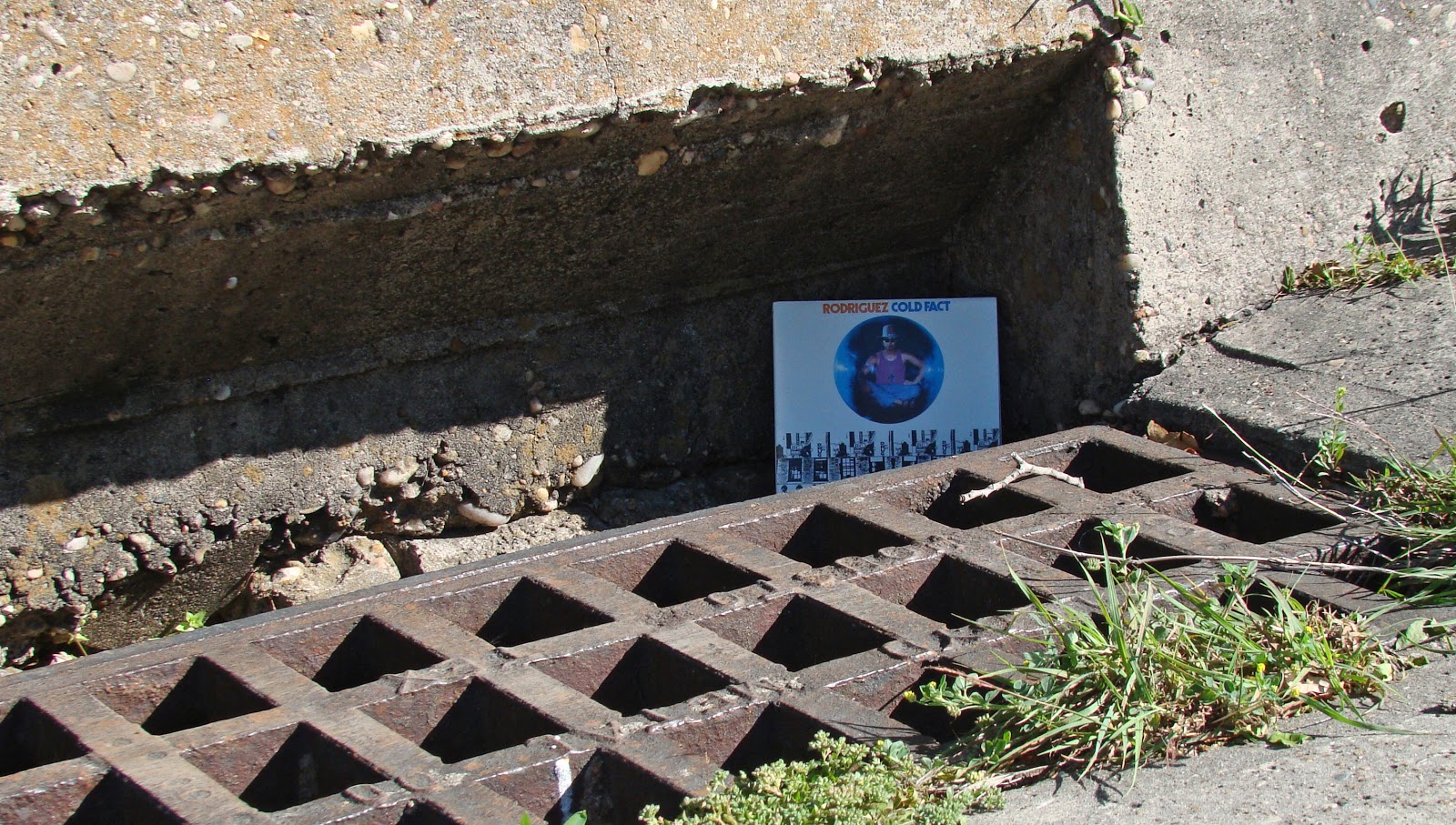
As if justice would not be denied, in the last chapter of his life all that music which seemed to wash downstream and down the gutter like a million fallen leaves to oblivion, suddenly gained critical mass. A lifetime of leaves blocked the drain! Something finally stuck, and he finally got a break. And in a wonderful turn of events, Art won. The system that kept him down was by then a mere question on a history test, yet the music it forged prevailed. To top it off, a wonderful documentary was made to tell his inspiring story. In the end, he was seen not only as a significant artist, but a cultural icon, a bridge between cultures and generations, a philosopher, and a downright decent human being.
This is the story of Navasota’s blues legend Mance Lipscomb.

And this is pretty much the same story for Sixto Rodriguez. But with more twists and turns. You probably had never heard of him and there is a good reason why. If Mance was carefully discreet, Sixto was painfully shy. Where Mance would adapt and please his audience, Sixto would choose to redirect, embrace new forms of expression, keeping him from his primary craft. Mance would work at all kinds of things to survive and then fuel his dream inside of his weekend venues. Sixto became a craftsman who took pride in his daily handiwork. He found contentment in other more practical expressions, as he dared to dream.

There is a powerful, award-winning documentary that provides all the details of how Sixto Rodriguez stayed head down and working his tail off for over thirty years, having given up on his music as a career. And you need to rent and watch the film. But let me whet your appetite. It is a great American story. It is also a great American indictment.

You see Sixto, a tall wiry street kid from Detroit, a first generation American, managed to attract significant interest in his songwriting talent before he threw in the towel back in the Seventies. He recorded a couple of albums, and even went on tour. But sales were flat. And at this time there was a culmination of the social revolution begun in the Sixties, and there was lots of competition, and perhaps sexier, more promising rock star wanna- bes lined up by the dozen to fight for the prize. After a couple of years of disappointments, Sixto went home for good. He was beaten down and ready to face reality.

He did what he could, did what he had to do, and became good at it. He became a home remodeler, someone who designed, repurposed, gave old worn out stuff a new lease on life. He found satisfaction in the healing art of home restoration. He went to college, studied philosophy and dabbled in politics.

Decades passed. The Seventies, the Eighties, the Nineties. The Turn of the Century. Then one day one of his daughters found a chat on the Internet discussing “Rodriguez.” A bunch of passionate fans, mostly from South Africa, bantered about this music legend, "now deceased," who had made such a powerful impact on their world. He was as big to them as the Beatles, or the Stones, or Elvis, even bigger. African Journalists wondered had anybody researched his life, or verified the facts of his death. The United States was a long way off, how could they even know who to ask, where to look for relatives? They had believed for decades that their idol, Sixto Rodriguez, had become depressed back in the Seventies and one night had committed suicide on stage. He had purportedly set himself on fire during a performance. The tragedy had only fanned the fire of his mystery… and record sales.

Rodriguez’ daughter entered the chat, and music history began to unfold. While Sixto was living his life of obscurity, his music took on a life of its own. South African youth had discovered his music, and somehow it gained traction. His songs about social revolution and the perceived wrongs and injustices in America were even more apropos in a country that still enforced apartheid. It was largely his music that greatly inspired South African youths, who led protests and ultimately brought down the white supremacist regime. Blacks were once again enfranchised and took back their country. Albeit imperfect, justice had been served, common people were once again in charge of their own human potential. The ideals of democracy and self-determination once again rang bells of hope throughout the world.

And yet Sixto, unaware, went on with the hand he was dealt. All while his records sold in the thousands and tens of thousands. Most musicians in South Africa knew some of his songs by heart, if not lots of them. They were celebrated as anthems of their National re-invention. All while Sixto Rodriguez lived poor, in a small bungalow with few amenities. He chopped wood and burned it in a wood stove. He picked his guitar. He became a good neighbor, a loving father, a local character.

And here is the belated indictment. Somewhere, some person raked in the spoils of his music career that never happened. Record sales, royalties, whatever Sixto had coming, even the knowledge of making such an impact on history, was robbed from him.

Then his daughter told him that a bunch of people in South Africa thought he was dead and that he was the greatest. Some of them refused to believe that she was his daughter or that he could possibly still be alive. Now years later, after several tours in South Africa, he is known to be very much alive and loved all the more… as a living legend. His resurrection was an amazing story in itself… and it too was pretty much ignored by the American Media. It seems that even today, powerful unseen forces have left no stone unturned… in fact have piled them onto Sixto Rodriguez’ premature grave. But like the story of Mance Lipscomb, art won the day.

All the meanness, selfishness and treachery the unseen powers had could not stop his music, its impact or its popularity, in a void where they had no control. And Just as Mance Lipscomb outlived his enemies who practiced every kind of Civil Rights violation, and he lived to see his music shape a lasting legacy, Sixto Rodriguez has finally enjoyed the sweet joy of… acceptance.

Validation.

The crowd Friday night at his concert at the Frank Erwin Center in Austin was gushing with pure affection as Sixto came out to get a genuine dose of Texas hospitality. Each song, a should- have- been hit, every fan transfixed on this humble man brought out of retirement to take his place in the pantheon of Dylan and Lennon and Jagger. 

And it is a unique presentation; Rodriguez staggers out, escorted by his daughters onto the stage, feeble and delicate. He puts on his little black hat and takes on the countenance of a Crow Indian Chief. You can’t help but expect him to fall face first right off the stage. But then he stiffly starts to strum. And he finds his inner strength and begins to sing. Then the magic begins; Cutting edge lyrics even for today’s standards, delivered by addictive melodies that make your ears beg, sung by an endearing, soft-spoken gentleman, and backed musically by young musicians who ironically can barely appreciate who and what he represents. And there is the unmentioned impact these songs have had for millions. Not to mention the unanswered injustice of the decades of robbery of his music, his name, his just desserts. That kind of outrage would make anyone bitter, but instead Sixto stands as a man full of gratitude.
Sometimes things bloom where they were NOT planted...

“Hate,” he explained, “is too powerful a force to waste on someone you do not even like."

In spite of everything, the embezzlement, the poverty, the years of “failure,” he maintains an amazing sense of humor, a sense of being, perhaps something he has learned in these years since those first recordings. And perhaps that is the way it was supposed to be. Perhaps the Almighty allowed it all, for a purpose. America was not ready for Sixto Rodriguez in the 1970’s. A tender soul, he may have not been ready for America or the grind and inevitable addictions of the entertainment industry. Now they are finally ready for each other. And that gives all of us hope, in whatever dreams we are reaching for. Amazingly, I had never heard of him until a few months ago... and then like a lightning bolt, he actually comes to perform here in Texas! Now that's Providential timing! And Sixto is the patron saint of happy endings and ultimate justice, in spite of the odds.

Let the lovefest commence.

If you cannot get to see Rodriguez in person, do get his CD’s…I strongly recommend his album Cold Fact for starters.

And go rent "Searching for Sugarman" to get the whole story.. and buy extra tissues when you do!

Saturday, October 19, 2013

Combined, it took over one hundred years to prepare these men for their show in Navasota!

THE SOUNDS OF NAVASOTA
As performed by The Sounds of Nashville!

Golden beginnings at Navasota River Halls

Entering Michael Havens' magnificent creation is like walking into G. Harvey's most extravagant western imagination...

I started my career as an arts/entertainment correspondent for ABC40 Bryan-College Station by covering this story, which is very close to my heart. It was a golden beginning for me and Navasota River Halls, and sweet fruit borne over years of preparation... as history was made in the Brazos Valley...

Michael Havens, owner of this amazing new music venue, had to be pleased with this maiden voyage as his flagship set sail under a full moon with a stellar line-up of entertainment. A grand concept seven years in the making, his 16,000 square foot facility will become a venerated Brazos Valley landmark, sure to  give visitors their fix for smoke-free Texas-styled entertainment. I could wax on... but I'll let the pictures and captions tell you what you missed. But for over a hundred delighted music fans, it was a night to store forever in their file for "favorite places," and a place to go back to as often as possible.

Front and center were the Sounds of Nashville,  a.k.a. Dan Miller, Brad Davis and Tim May.  It would take some of the best musicians in Nashville such as these to be able to match this stunning new venue... and stand the competition with the awesome surroundings. They held up mighty fine.


This was a monumental, multiple epiphany for Navasota, Texas. Happy local folks finally got to see and experience Haven's vision after watching construction on the edge of town for seven years; The bluegrass community got to discover a fabulous new venue for their genre; Michael Havens finally unveiled what he has been explaining to the expectant music world for so long, as The Sounds of Nashville brought their guitar virtuosity to the Brazos Valley. And I, your very humble correspondent, made my debut as a reporter for ABC40, and had the pleasure of covering this wonderful event, so crucial to the economic development of Navasota, with television cameras! WOW!

[This will be the last time I get to WOW myself. From now on, it's strictly business. In fact I will begin, in this time of beginnings, another blog, especially for my coverage of the Brazos Valley arts and entertainment scene.]
 
Younger members of the Armstrong family join the show for the finale.

Congratulations to Michael Havens  for his vision, now materialized, after all of his hard work. And special thanks and congratulations to Scott Armstrong and his family and volunteers for their efforts which brought this event to  pass. Almost everyone was glowing with smiles of real joy for the excellent, golden beginnings of what is sure to become a Texas legacy. Some were just plain tuckered out. 

Eventually everybody will come to realize the significance of what they experienced, in time...

But as for Navasota music lovers...  WE are ecstatic!

Sunday, September 29, 2013

Beau Hinze sings UNDERTOW!

Check out this fun video... precious actually, about a 92 lb. "flathead yellow named Undertow!" by our back porch masters across the river in Washington County!
Beau Hinze and the Back Porch Shufflers
Just click below to find the video on YouTube!

Thursday, September 26, 2013

Milt Larkin... Another Navasota-born Blues Legend!


Born in navasota, Milt "Tippy" Larkin was a popular Houston band leader and musician.

 Like Mance Lipscomb, Milt Larkin was the son of a Brazos bottom fiddler. By the age of ten he knew that he wanted to be a musician. Born in Navasota in 1910, Milton "Tippy" Larkin was relocated to Houston as a youth and ultimately became a big band legend. A trumpet prodigy, he switched to the trombone and built his own band in 1936 and toured Texas and the Midwest for six years. Unwilling to accept the inferior wages recording studios customarily offered black musicians, his bands rarely recorded. But whatever the name, his band was always considered the cat's meow, featuring a who's who of talent, including Tom Archia, Arnett Cobb and Eddie "Cleanhead" Vinson on sax.


Larkin enlisted during WWII, playing in military bands, and afterwards continued his reign. But Larkin remained fiercely independent. Performing under the name Milt Larkin and His All Stars, he formed his own record label called Copasetic, to record his own album Down Home Saturday Night.


While in his youth he refused to be insulted with wages beneath his talent, he spent his twilight years playing for free for schoolchildren and in nursing homes around Houston. He passed away in 1996.

For a run-down on all the music legends of the Navasota Valley, click on the LINKS below to Chapters 7, 8 & 9 in my book: The Light of Day:

Chapter 7: Blues Masters
http://brazosvalleyblues.blogspot.com/p/chapter-seven.html
Blind Lemon Jefferson, LEADBELLY, Lightnin' Hopkins, Blind Willie Johnson, Texas Alexander, Tom Shaw

Chapter 8: The Songster of Navasota
http://brazosvalleyblues.blogspot.com/p/chapter-eight.html
Mance Lipscomb- Texas Ranger Frank Hamer- John Lockett

Chapter 9:  A Flood of Creativity
http://brazosvalleyblues.blogspot.com/p/chapter-nine.html
Milt Larkin, Buster Pickens Juke Boy Bonner,  L. C. Williams, L. C. Robinson, Blind Arvella Gray, Albert Collins, Tomcat Courtney, Nat Dove, Joe tex, Alvin Ailey, Stubb Stubblefield
 

The theory of this blog

You won't be surprised that I have a theory.

This blog is an installment to the future. I am writing all this down now, as a treasure to be discovered some day when people are asking questions and are willing to search for the answers. Right now you care about immediacy. Instant messages. Sweeping technologies that provide a million possibilities. A million disconnected facts. You are having fun. But there is no wisdom in it.

Someday you will realize that you are not living life but only vicariously gathering cheap thrills that do not have any soul or gravity. You will begin to wonder who we were, where we came from, what we thought and did. And why? Because the generation before you did things. They made something that you can only read about, they made history.

I have found that my own life has been enriched beyond measure, and wisdom imparted to me way beyond what my parents or tired teachers tried to teach me, through the study of what human beings did. It inspires me, makes me want to go out and do something myself.

So start digging, history is waiting!

Tuesday, August 13, 2013

A Tradition of Music Continues

Clay Failla plays drums while Mitch White belts out one of his outstanding originals.
 
Our weekly jam session still rocks every Friday night.  Beginning our fourth year, we now hold it at the Filling Station Diner in downtown Navasota. It's still the unpredictable blend of all kinds of LIVE music, and we still refer to it as the "box of chocolates." Because you never know what you're going to get!

During football season attendance wanes a little, but the musicians are committed to gathering every week.


In the past few years, we have attracted artists from all over the region, and especially those from the Bryan - College Station area. Randy Pavlock, Tubee Pushee, Chris Puente, Mik Finn and even Ezra Charles of Houston once drove up and jammed with us. Some of our original jammers three years ago ended up forming the Brazos Mudcats and getting gigs!

Misslette
 
We are fortunate enough to have a veteran professional performer, Misslette the Singing Cowgirl, to serve as the director of the jam, which operates in a round-robin system. Misslette can do it all, from her classic country and western songs to gospel to blues. She is a cross between a band director, music tutor, spiritual mentor and den mother! She has a few rules that we live by, but they are reasonable and easy to embrace, and the progress in the musicians has been very exciting.


 Mitch White owns the diner, which he shuts down for the jam. He has turned out to be one HECK of a picker and songwriter.


It is a family friendly event, and there is no smoking allowed inside. You can bring your own food or beverages if you wish. This is Dave Webster showing off his new little girl... who thinks he is the best picker there! I'm not sure anybody would argue with her either!

Jason, Doug Taylor of the Fathers of Texas, and Chris Puente, of the Old Bridge Rhythm Band.
 
We start at 6:30 and play for at least four hours... or until we all fall on our face. It is Country, pop, blues, rock 'n roll, even some Gospel. Young, old, and a bunch of the middle, but we don't pay attention to these kinds of things.


But I gotta say, we LOVE young people, and want to encourage young adult musicians, by providing them a place to learn their craft and grow.  This is Navasota's own Robert Herrera and Saul Garcia, who have some really great songs.

There turns out to be a bunch of talent right here in the Blues Capital of Texas! Musicians and music lovers are all welcome. It's FREE and fun and downright inspiring! 

You're missin' out!

Ezra Charles Gets Down in FLAMES!


It was all part of the act. Ezra Charles thrilled us when he came to our jam session at Blues Alley a couple of years ago and made a major impression. We have been hoping to see him at the Navasota Blues Fest ever since. After his concert in April in downtown Navasota during our Mance Lipscomb birthday celebration, he finally got his chance at Blues Fest, and he did not let us down.

Charles brought along an all-star brass trio of fabulous young girls that could actually match him on the stage and an excellent electric guitar player to make his sound POSSESS the Grimes County Expo Center during his performance Saturday night... everybody around me agree it was one of the best in the event.

I was dog tired after days of sleepless nights getting ready for the various shows and events... and then he WOKE MY MIND. I don't have a pic, but at the end of his set his piano shot flames four feet in the air. With him blasting, those girls rocking and blowing, and those flames licking I had trouble ever going to sleep after that.

And that was just one of many GREAT shows featured at the 18th Annual Navasota Blues Fest. And for the record, the thing has been AIR- CONDITIONED FOR 18 YEARS. IT'S SO COLD IN THAT HALL THAT EZRA BROUGHT HIS OWN HEATER.

Thanks to my brother Reynolds for sending me this pic from his cell phone.

Local Musicans Kick-Off the Navasota BluesFest Weekend...

It was a packed house at Mallett Brothers for our third Blues Capital Revue.
After a couple of years of financial debacles promoting local musicians, we at Blues Alley took a little time off this year. ..

But Lo and behold, the local musicians did not want the two year “tradition” to stop, so Misslette the Singing Cowgirl got everybody together and made a wonderful event at Mallett Brothers BBQ, to kick off the 18th Annual Navasota Blues Fest with some local talent… And it was a smash!
The loyal Navasota public filled up the place, leaving standing room only. This just made Bert and I glad we finally got out of the way. Thanks again to Mallet Brothers for hosting this event, which meant a lot to everyone. And thanks Misslette for never, never, never giving up, no matter how much I try to convince you otherwise.

If you missed it, you really missed a glowing moment of Navasota history.

For the first time in my experience, we got several of our excellent local recording artists on the same stage, often playing together. I’m pretty sure Misslette was in cowgirl heaven, with such stellar musicians backing her. She genuinely loves these musicians and Thursday night they loved her back. Several years of jams led by her at Blues Alley, the VFW hall, and now at the Filling Station have successfully sewn the music community together, and it was a sight to see. And a privilege to hear.

Here are a few highlights!
WOW! A whole string of local stars, a veritable constellation of elation, shows the best of our musicians in their best combined effort ever.Misslette, Randy Pavlock, (Clay on drums but out of sight), Chris Puente on stand up bass and Tubie Pushee help bring Misslette’s Down Home Blues home to Navasota.
Musicians filled in between the sets… so there was little down time, as Robert Herrera and Saul Garcia, high school-aged artists, showed what a promising future our music community has. Everybody was impressed with them…this is the kind of fun we have every Friday night at the Filling Station Diner in downtown.
Dave and Sasha Webster blew everybody away with their powerful vocals and haunting deliveries, that kept everybody nodding and smiling and ready for another song. These two could go on the road, but God we would miss them. And with a brand new baby, maybe we can hold on to them a little longer!


Probably the biggest hit of the night was Nick Baca’s original rockabilly-roller anthems. We had met him just a few weeks ago, but what a find! He brought the house down, with the help of Jason Shive’s electric guitar licks. Both of these artists played original songs, and their energy and enthusiasm were very easy on the ears.


The biggest, most pleasant SURPRISE of the night was when local restaurateur Mitch White took the stage and convincingly performed a couple of riveting original songs that should be recorded. Everybody knows Mitch, but nobody but those of us at the jam session at his restaurant, knew what talent he has been hiding. This was his public debut, and he ROCKED! Yeah, I’m kinda proud of all this… Then I even got to sing a few songs.


Thanks to Steve Seymour, we can say that KEITH RICHARDS WAS THERE, IN THE FLESH!
Planning a possible tour of the west coast, the Old Bridge Rhythm Band brought their arsenal of folk ways and played without any microphones. The crowd quieted down and they were well rewarded. Maybe someday they will manufacture electric SAWS for music, but in the meantime, Erin leaves everyone spell bound with her blade.


Still young and full of surprises, blues-rocker Randy Pavlock showed up with his acoustic guitar and Will Rose, his favorite acoustic bass player, proving his versatility and creativity in a given venue. What came out was a veteran performer, still growing and still making great music. Check out the signatures on that guitar!


Last but never least were Tubie and the Touchtones, led by Tubie Pushee who once again demonstrated why he is the undisputed dean of Navasota musicians. When asked about his participation, he committed himself and all his resource to the event, which, in typical Tubie style, meant loaning his drums, and oh yeah, Clay HIS DRUMMER, for the whole event. He has never been part of a problem, and always been a part of the solution whenever I’ve been around him. But he’s not just a great guy… nor his band members, but top professional musicians whole can lay it all down and give you a memory.

Thanks to all the musicians who made this possible, especially to Misslette, who pulled it all together. And for those who came out, thanks for supporting LIVE MUSIC in Navasota!